![Website Banner - 4x Match [Mobile]](/sites/default/files/styles/desktop_announcements_banner_style/public/2026-07/Website%20Banner%20-%204x%20Match%20%5BDesktop%5D.png?itok=dXq8ppuH)
![Website Banner - 4x Match [Mobile]](/sites/default/files/2026-07/Website%20Banner%20-%204x%20Match%20%5BMobile%5D.png)
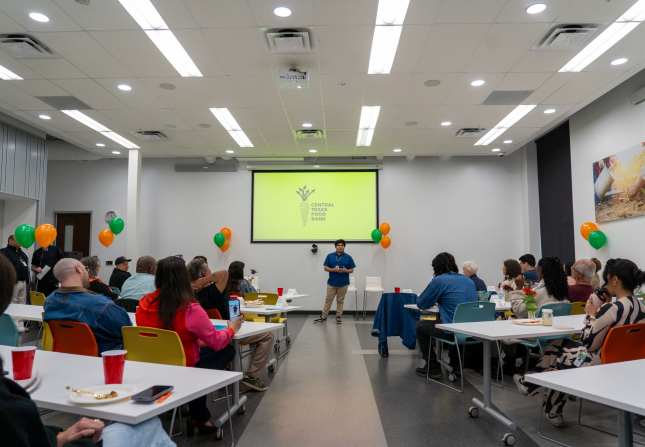
Some people discover the Central Texas Food Bank’s Workforce Training Programs while seeking a fresh start. Others find us by coming through our doors to volunteer, then noticing a flyer, a sign, or having a conversation that reveals a new opportunity.
This recent group of graduates came from different paths, but they share something powerful: each chose skills training as a step toward stability, confidence, and a stronger future. Their stories reflect the purpose of these programs — to meet people where they are, eliminate barriers to training, and help neighbors develop real, job-ready skills in culinary and warehouse operations.
A Doorway Through Volunteering
For several graduates, volunteering wasn’t just a way to give back; it became the starting point for a new opportunity.
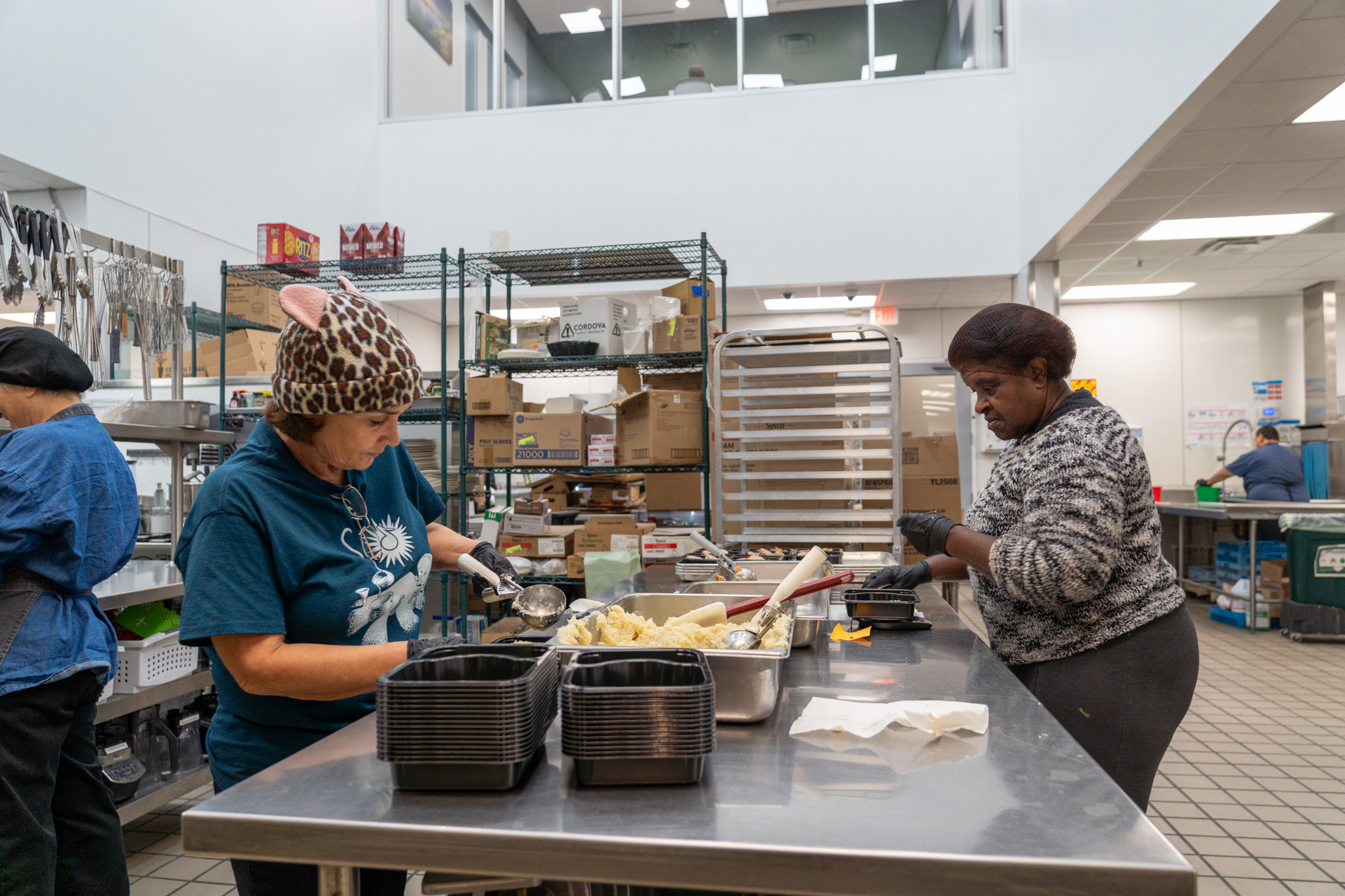
Christy moved to Austin from Monterrey, Mexico and faced the challenges of starting over: updating documents, finding work, and building community. Volunteering felt familiar — she had done it before in hospitals and food banks — and it was nearby. Gradually, she discovered the CTFB kitchen, fell in love with the environment, and noticed the program information at the front desk.
She signed up, got selected, and began developing skills that translated directly to career options in professional kitchens. For Christy, the training wasn’t just about cooking; it was about gaining confidence, learning technical language, and getting hands-on experience with equipment that mirrors employer expectations.
Dora also found the program through volunteering after retiring from a long career in public service. She visited the food bank intending to give her time, then saw a flyer and decided to apply. Dora’s story shows that workforce training isn’t only for those entering the workforce for the first time; it can also be about pursuing a new passion, building confidence in a new field, and starting a new chapter in life.
For Ricardo, volunteering led to a conversation that changed everything. He and his family spoke with staff at the front desk about their situation — between jobs, seeking to build skills, and hoping to expand opportunities. Right next to them was a sign for the Culinary Training Program. A simple connection turned into a valuable plan.
Learning Skills That Employers Look For
Workforce training is most effective when it’s based on real experience — skills people can use right away and language they can bring to interviews, resumes, and the workplace.
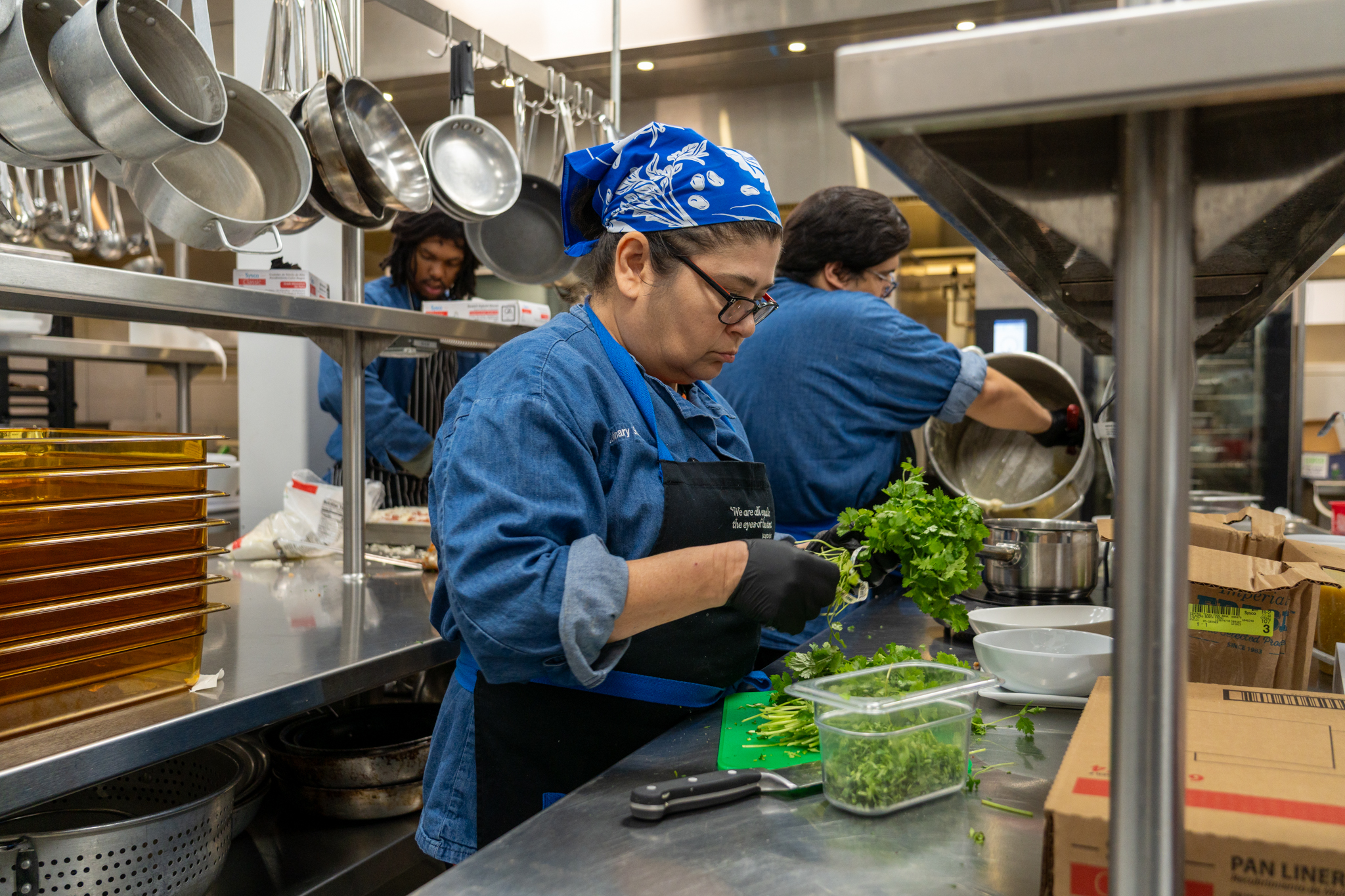
In the Culinary Training Program, this includes basic technical instruction (knife skills, cooking methods, food safety), as well as the less-visible skills that help someone succeed in a professional kitchen: time management, teamwork, adaptability, and confidence in receiving feedback.
Ricardo described what he lacked before the program: he could cook, but he didn’t have the technical knowledge behind it — the “why” that professional kitchens depend on. During training, he gained not only new techniques but also the mindset that supports growth.
“I would say… being open to criticism,” Ricardo shared. “It’s essential. Everyone’s palate isn’t my palate. It’s always good to have that second opinion.”
That type of learning — how to take feedback, adjust, and improve — is crucial for building a career, whether a graduate’s next step is a bakery job, a restaurant kitchen, or a long-term goal like owning a café.
In the Warehouse Training Program, the same principle applies: hands-on learning in a real operational environment. Levent, a recent immigrant from Turkey, found the program through an online search while looking for skills training soon after arriving in the U.S. He called several times, enrolled, and completed the program, learning essential warehouse operations like receiving, inventory, and shipping.
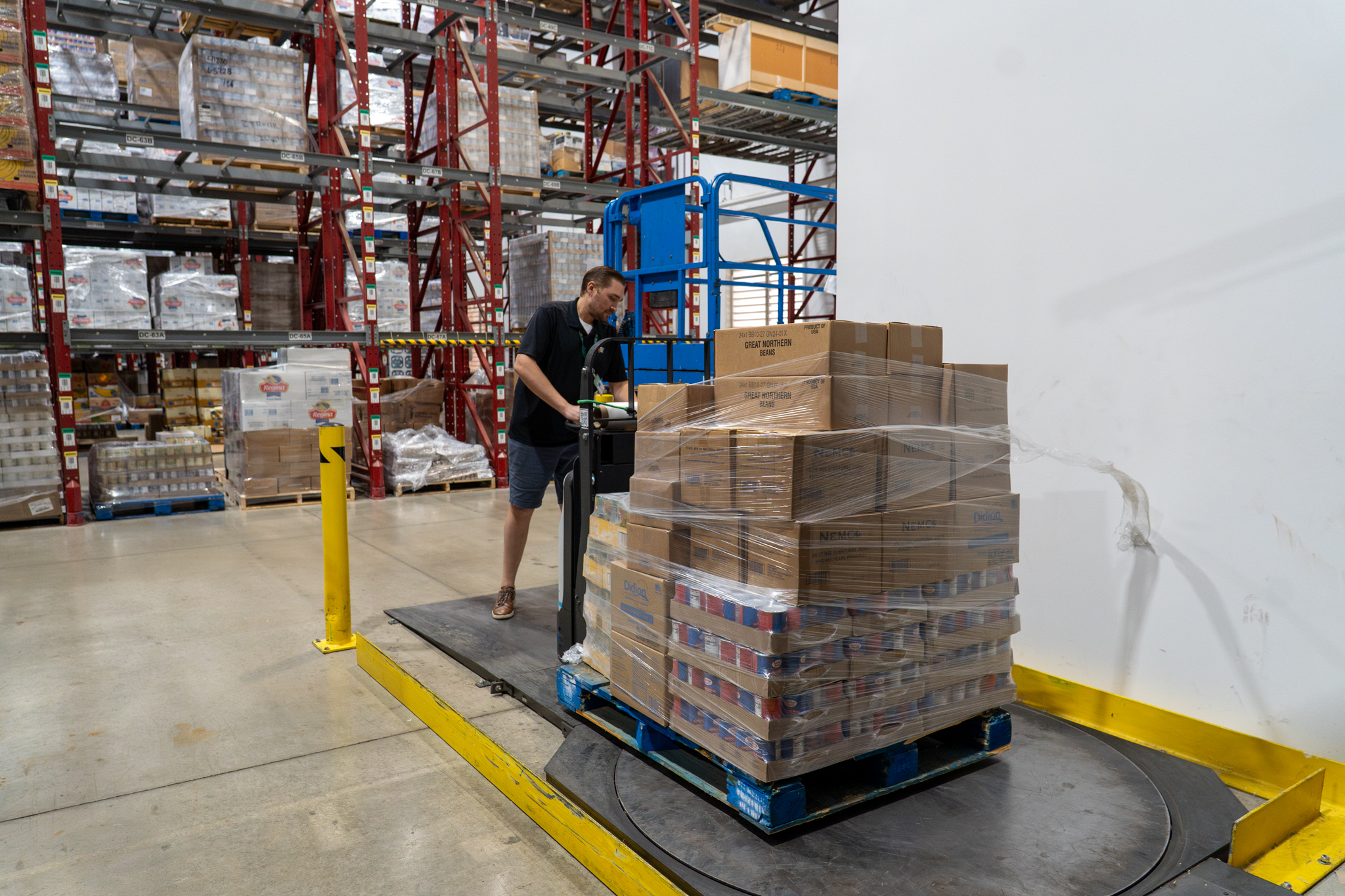
Because the training was practical and closely guided, he gained confidence quickly. Not long after graduating, he was offered a job at Central Texas Food Bank and accepted.
For Levent, the program provided more than technical skills. It offered structure, clarity, and a reliable entry point into the U.S. workforce, alongside a community that welcomed him.
Trusted Referrals Matter
Not every path begins with volunteering or an online search. Some neighbors find their way to workforce training because someone they trust recognizes their potential and helps connect them to opportunities.
Robert was referred by someone in his support system — a person who understood that the program could help him build structure, confidence, and forward momentum. Robert had experience in cooking, but he wanted a clear timeline, a credential, and the accountability that can be difficult to rebuild while between jobs.
For him, the program became a bridge back into the workforce, built on community, consistency, and dignity.
Why These Stories Matter
These graduates arrived at Central Texas Food Bank through different avenues: volunteering, referrals from trusted partners, and online searches. That variety is important because it shows what’s possible when programs are visible, accessible, and designed around real people’s needs.
Workforce training provides stability and belonging. It’s about giving neighbors the tools to take the next step — whether that step is a first job in a new industry, a higher-wage role, or a fresh start in a new country.
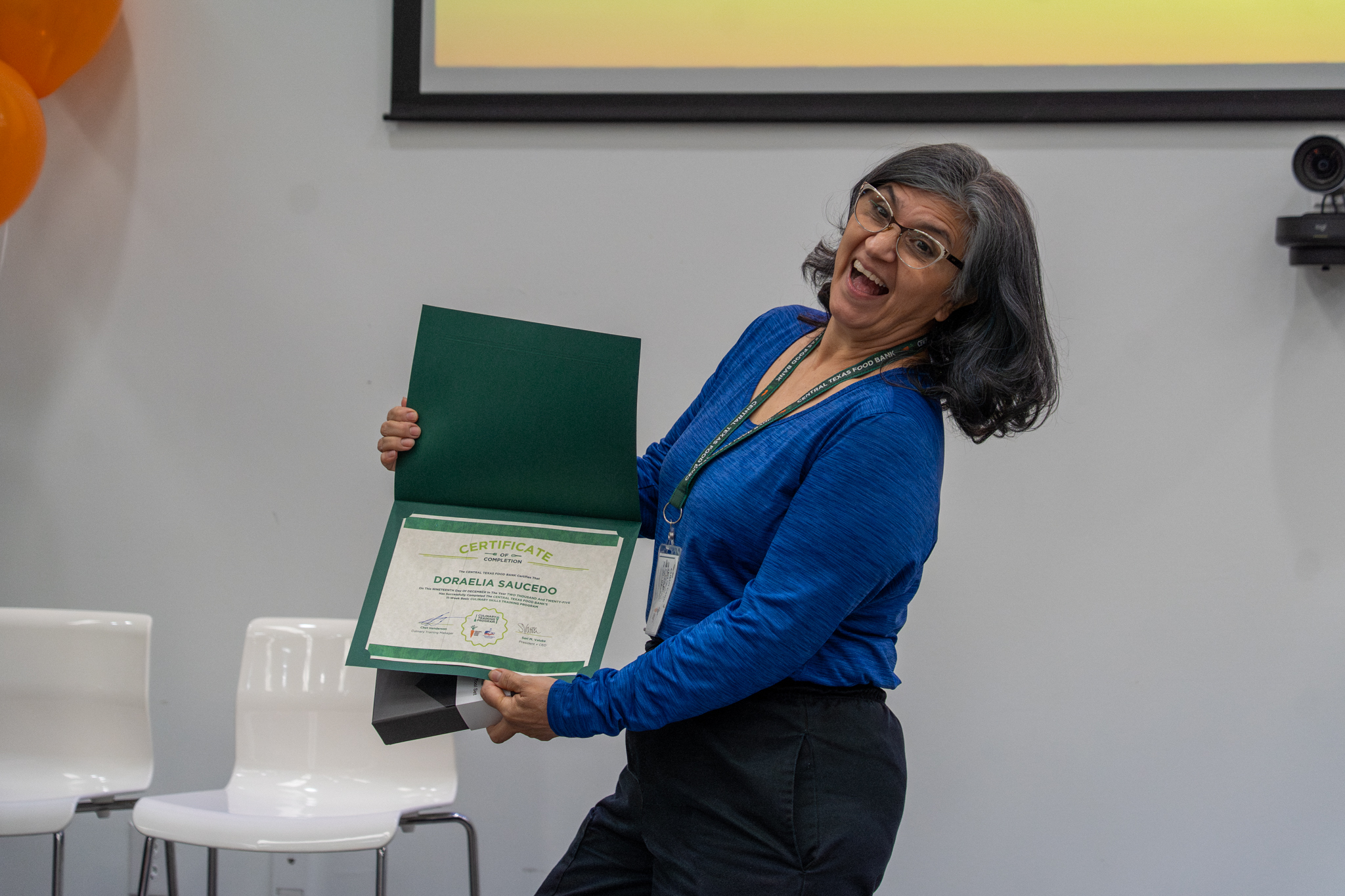
It’s also about community members believing in themselves — showing up, learning, graduating, and moving forward.