
Meet Emily Foxman: Turning Community Voice and Data Into a Stronger Food System
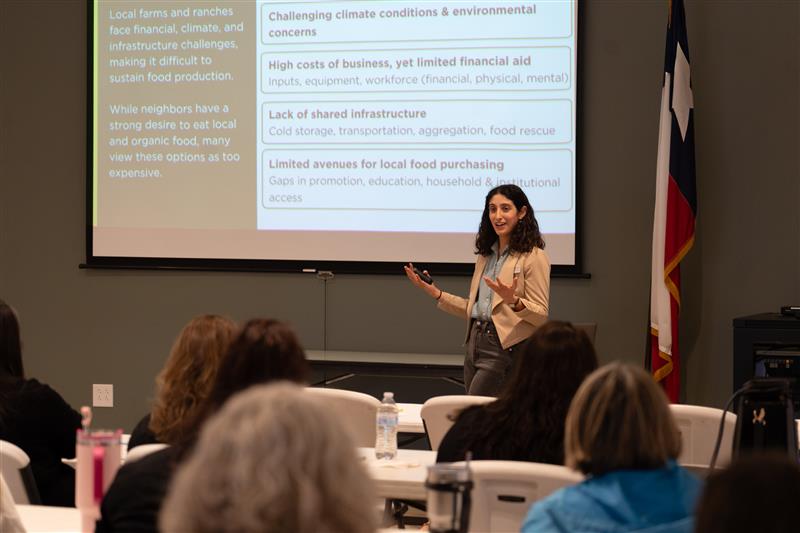
If you’ve ever heard someone break down complex, systems-level work in a way that feels both relatable and human, you know how rare that is. Emily Foxman brings that kind of clarity to the Central Texas Food Bank (CTFB) every day — connecting research, community voices, and real-world action to support a stronger, more resilient food system for Central Texas.
Emily was recently promoted to the Director of Food System Planning. She started as a Research Manager, ensuring lived neighbor experiences were reflected in how CTFB understands gaps, strengths, and opportunities across the region.
Now, in her expanded role, she’s connecting more dots — from local agriculture to food access — to support long-term solutions for our neighbors and communities.
A Role Built at the Intersection of Data and Lived Experience
For Emily, the common thread in her career has always been connection: bridging what the data shows with what communities experience, and translating those insights into decisions that improve access, stability, and health.
“My work has always been about connecting the dots,” Emily says. She sees her role as a space where public health, food systems, and community-centered research meet — supporting strategic decisions about programs, partnerships, and advocacy.
What makes her work distinct at CTFB is how grounded it is in real life.
“It's been really critical to supporting our Mobile FARMacy initiative, to helping identify where we can bring in new school food pantries, new partnerships with external organizations to help meet folks where they are and really align our food initiatives with what we're hearing from the community directly.
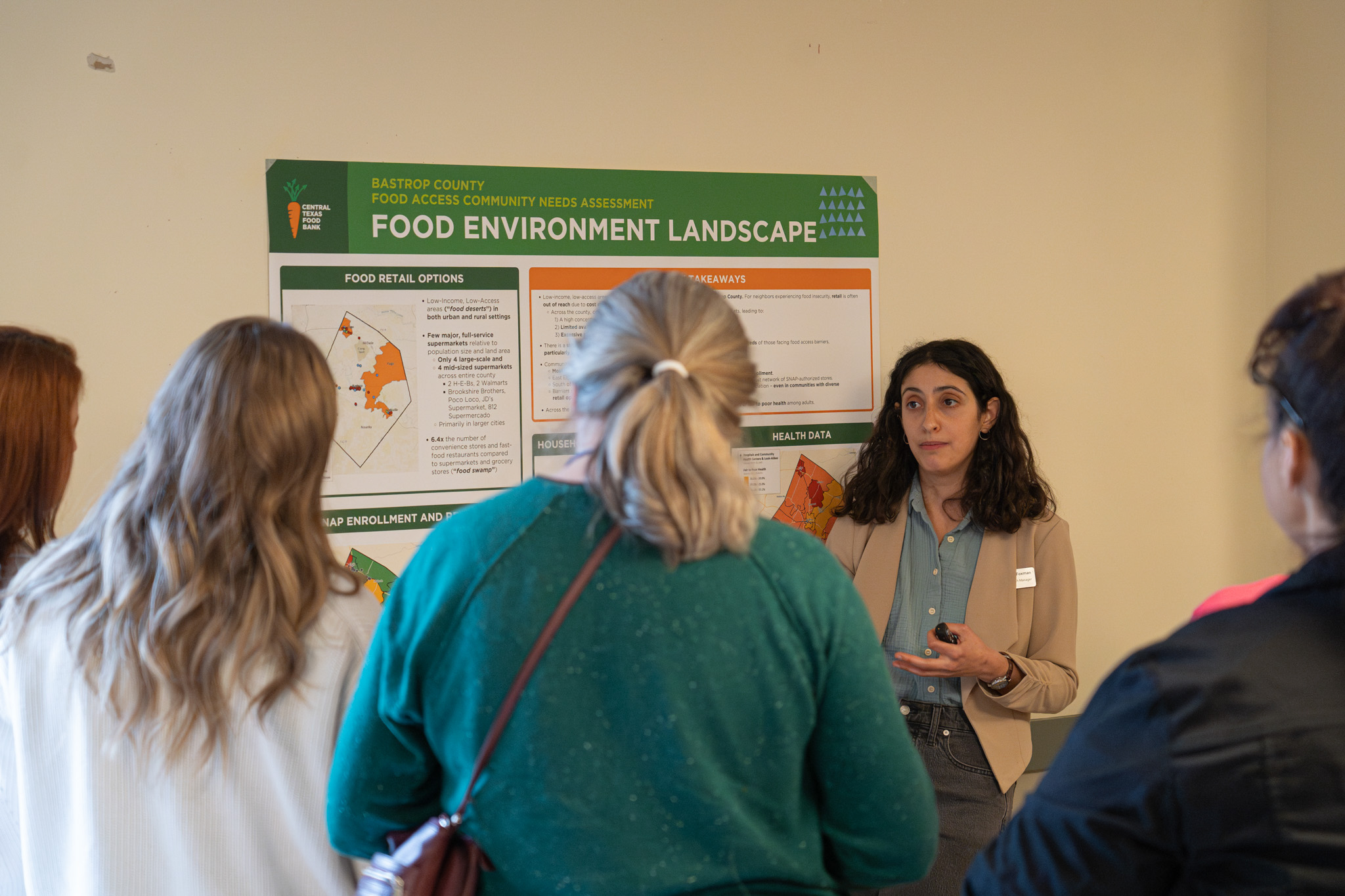
Making Space on Purpose: “Who’s at the Table — and Who Isn’t?”
A question Emily returns to often is simple — and powerful: Who’s at the table, and who isn’t? Who has historically been left out of decisions that shape local food access, and what does it look like to carve out space for neighbors to be heard?
That mindset shows up in how she approaches leadership and collaboration: convening partners, local leaders, and cross-sector experts while keeping neighbors at the center — not as an afterthought, but as essential voices in shaping solutions.
For Emily, this isn’t abstract. It’s about dignity and choice in practice: ensuring the people most affected by food insecurity have a real say in the systems, policies, and investments that shape how food reaches families in Central Texas.
“For me, I'm very people-centered, I'm very community-centered, so it's important for me to be able to talk with folks to hear what's important to them to help elevate that to understand how we can better shape our programs and services. How we can think more upstream too, even beyond just neighbor experiences, but also about our food system work as well and what we're hearing on the ground.”
From Community Needs Assessments To Upstream Food System Solutions
Emily’s earlier work focused on the CTFB’s Community Needs Assessments, combining qualitative and quantitative data to understand priorities from neighbors and local stakeholders.
As that work evolved, it revealed another opportunity: thinking upstream — not just about food assistance, but about the systems that determine how food moves from farm to table.
“There were opportunities to think a little bit more upstream about the broader food system,” Emily says. She describes the need to close gaps in local food production, processing, and infrastructure.
In her current role, Emily supports initiatives that connect people and systems that help food reach households throughout Central Texas — including local agriculture, food processing, and distribution networks — with an eye on solutions that create both immediate and lasting impact.
Strategic Insights: Research, Dashboards, and Turning Insight into Action
Emily works within CTFB’s Strategic Insights department, a team that helps the organization make decisions based on evidence, community input, and regional trends.
“Strategic Insights is a pretty broad department,” Emily explains. The team’s work includes Community Needs Assessments, the Central Texas Food System Dashboard (which centralizes key food system data and shares it publicly for partners), and internal data that tracks programs and trends across Central Texas.
A common thread runs through all of it: insight isn’t the end goal — action is.
Emily points to examples like identifying where new school food pantries can have the greatest impact and supporting initiatives like the Mobile FARMacy — aligning services with what communities say they need most, not just what’s easiest to measure.
Numbers Can’t Tell the Whole Story
Emily’s approach to research holds two truths at once: data is essential — and incomplete without lived experience.
“We have really rich and amazing data,” she says, “and we also know that numbers don’t tell the whole story.”
That’s why community-based research matters. Focus groups, surveys, and listening sessions with neighbors and the organizations working alongside them help Strategic Insights build a fuller picture — not just of need, but of what’s working, what’s missing, and what’s changing in real time.
That fuller picture is critical when CTFB is communicating with leadership, policymakers, and regional stakeholders. Emily helps ensure the conversation about food security in Central Texas stays human — grounded in lived experience — so the policies and systems shaping our food access keep neighbors in mind.
At the center of that work is a commitment to dignity, community, and the belief that “there is no one face of food insecurity in Central Texas.”
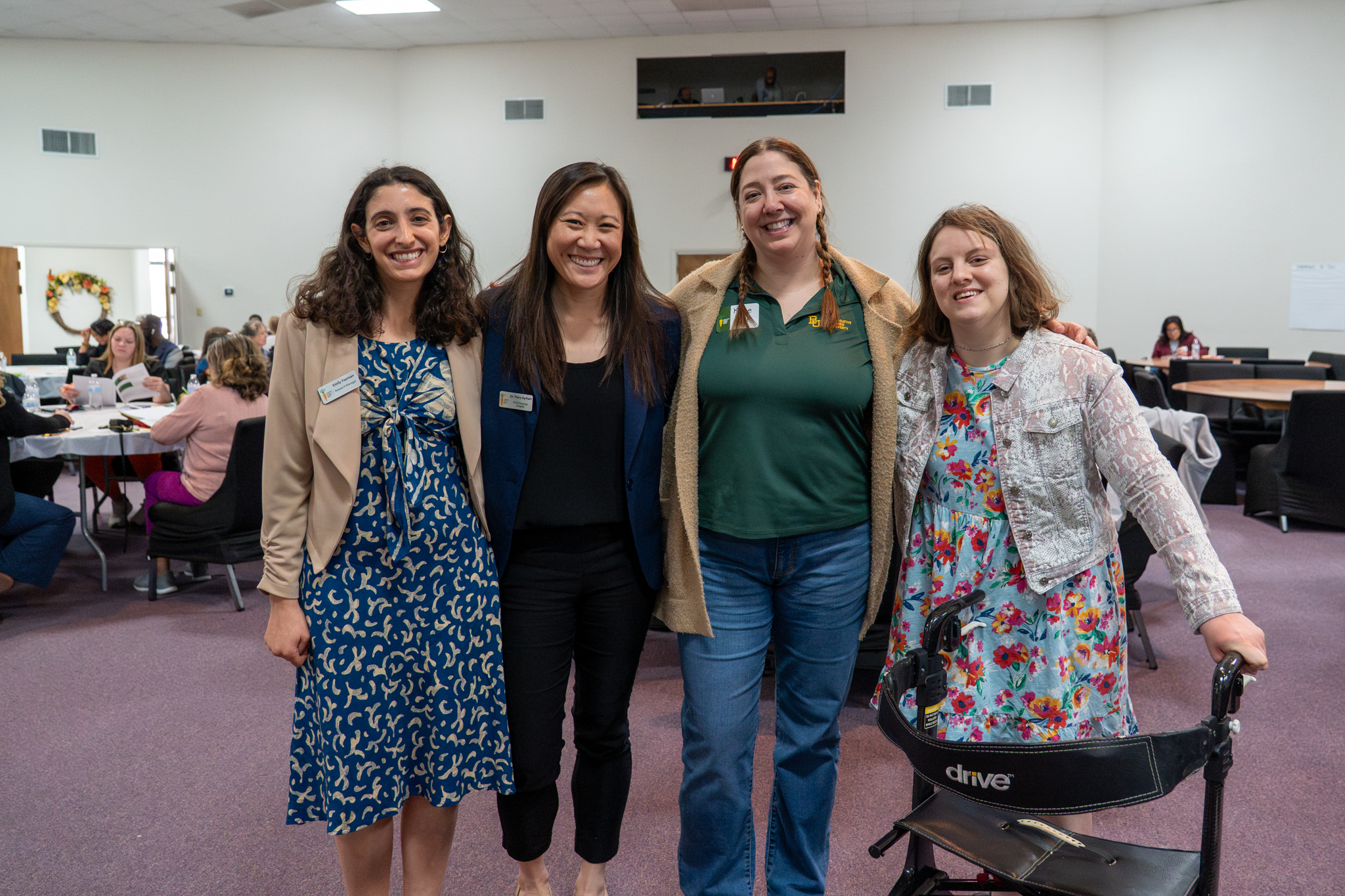
Building Long-Term Solutions Together
One of the most exciting aspects of Emily’s work is the launch of regional food system planning, including a Regional Food System Council that brings together diverse sectors across Central Texas.
Emily describes it as a place where the right people can gather at one table — local agriculture, food industry, public health, coalitions, and data advisors — to tackle complex challenges with shared purpose.
“We know these challenges are really complex,” she says, “and we know that we have the right folks in our community to drive solutions.”
And for Emily, that leadership question remains central: Who’s at the table, and who isn’t yet? Whose perspective still needs to be included in decisions shaping the future of food access in our region?
Why She’s Choosing to Grow Her Career Here
Emily has worked in food systems in different settings — from local efforts in Houston to international projects in Guatemala. What keeps her at CTFB is the energy and momentum she feels in Central Texas.
“Coming back to my community where I am now is something that I really needed,” she says. “There’s such an eagerness to be doing this work.”
That eagerness shows in the partners, coalitions, and community members who keep stepping up to help shape long-term solutions — and in the chance to build something sustainable and scalable for the future.
“There’s so much work to be done ahead,” Emily says, “but I’m energized by the many people ready to do it together.”
Central Texas Food System Dashboard
To learn more about how Central Texas Food Bank works with communities and partners to improve food access and long-term solutions, explore our work through the Central Texas Food System Dashboard and related resources.
Join Our Team
Interested in mission-driven work that blends research, community partnership, and long-term solutions? Explore careers and join a team building what comes next.