![Website Banner - 4x Match [Mobile]](/sites/default/files/styles/desktop_announcements_banner_style/public/2026-07/Website%20Banner%20-%204x%20Match%20%5BDesktop%5D.png?itok=dXq8ppuH)
![Website Banner - 4x Match [Mobile]](/sites/default/files/2026-07/Website%20Banner%20-%204x%20Match%20%5BMobile%5D.png)
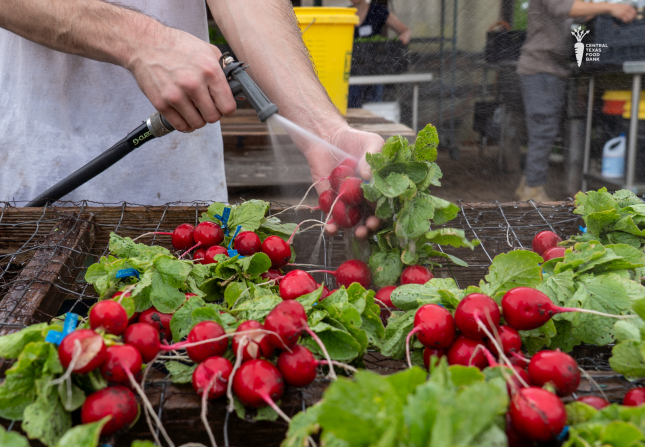
Fresh fruits and vegetables are an important part of a healthy diet, and you shouldn't stop eating them because of recent news about cyclosporiasis.
Quick Produce Safety Checklist
- Wash your hands before and after handling produce.
- Rinse all produce under running water.
- Scrub firm fruits and vegetables with a clean produce brush.
- Cut away bruised or damaged areas.
- Dry leafy greens well.
- Refrigerate cut produce within two hours.
- Clean your refrigerator, cutting boards, and kitchen surfaces regularly.
Food safety is part of everything we do at the Central Texas Food Bank (CTFB). Our team members receive food safety training and follow strict handling practices every day. While no home washing method can completely eliminate the risk of Cyclospora, proper washing and storage can help reduce your exposure to foodborne illness.
Here are eight simple ways to make your produce as safe as possible.
1. Wash your hands before you wash your produce.
Wash your hands with soap and water before and after handling fresh fruits and vegetables. It sounds obvious, but clean produce can quickly become contaminated by dirty hands.
2. Wash every fruit and vegetable under running water.
Give all produce a thorough rinse under cool running water before you eat it, cut it, or cook it. And don’t forget about the produce that you often peel, such as avocados, melons, oranges, and bananas.
The running water helps remove dirt and some microorganisms from the surface. Skip the sink full of standing water as it can simply transfer dirt from one item to the next.
Pro Tip: If you're washing several items, change the water frequently if you're using a bowl or colander. The dirty rinse water is great for watering flower beds instead of sending it down the drain.
3. Give leafy greens a little extra attention.
Leafy greens can trap dirt, sand, and debris between their leaves, so they need a little more than a quick rinse.
Separate lettuce, spinach, kale, and other leafy greens leaf by leaf, then swish them around in a large bowl of cool water. As the greens soak, the dirt and grit settle to the bottom of the bowl. Lift the greens out of the water instead of pouring the water over them, or you'll just wash all that dirt right back onto the leaves. Then, rinse the leaves with fresh water again before drying.
If you're washing several batches, replace the water each time. It gets dirty quickly, and you don't want to transfer grit from one bunch to the next.
Important: Dry your greens well before storing them. A salad spinner works great, but if you don't have one, wrap the greens in a clean kitchen towel, gather the corners, and gently swing it a few times to remove excess water. They'll stay fresher longer and make much crispier salads.
4. Give sturdy produce a good scrub.
Melons, cucumbers, potatoes, carrots, apples, and other firm produce benefit from a little elbow grease.
Use a clean produce brush while rinsing under running water. The extra friction helps remove more dirt and contaminants from the surface.
5. Trim away damaged spots.
Bruised, damaged, or broken areas can harbor bacteria and other microorganisms.
Before preparing produce, cut away any bruised or damaged sections. If an item smells off, feels slimy, or has developed an unusual texture, trust your gut—don't risk it. Compost it if you can.
6. Refrigerate cut produce quickly.
Once fruits and vegetables are peeled or cut, bacteria have an easier time growing.
The CDC recommends refrigerating cut, peeled, or cooked produce within two hours. Keeping produce cold helps maintain quality and slows microbial growth.
7. Keep your kitchen clean, too.
Washing produce is only part of the equation.
Clean cutting boards, knives, countertops, and colanders after preparing fresh produce. Cross-contamination can happen anywhere food is prepared, so keeping your kitchen clean is just as important as washing what's on your plate.
8. Remember: Washing helps, but it isn't perfect.
This is the most important takeaway.
Washing fresh produce is still recommended and can reduce dirt and contamination, but no washing method can guarantee removal of Cyclospora. That's why safe food handling practices work best when used together.
Fresh produce remains an important part of a healthy diet. Rather than avoiding it, focus on handling it safely every time you bring it home.
Sources: Centers for Disease Control and Prevention (CDC), Preventing Cyclosporiasis and Preventing Food Poisoning; U.S. Food and Drug Administration (FDA), Cyclospora.