
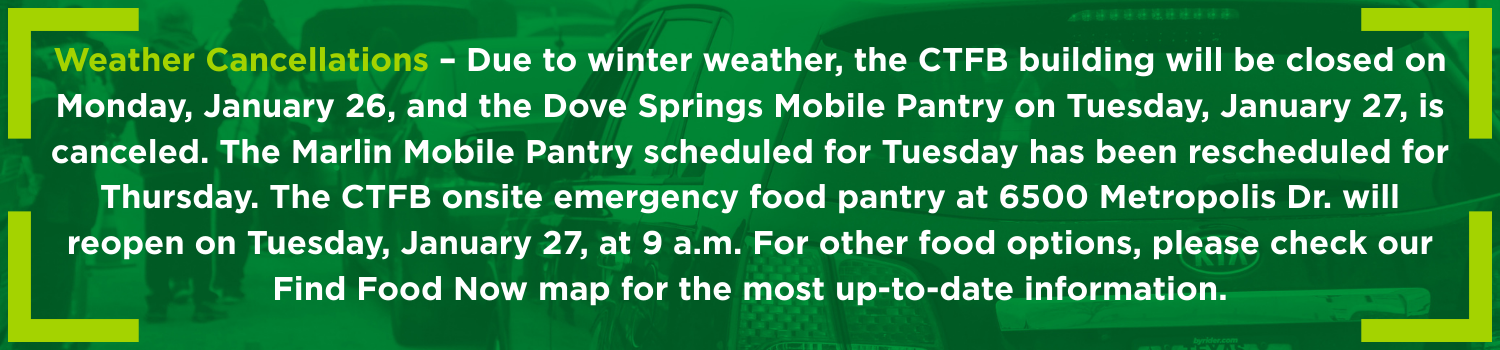
When winter storms, power outages, or other emergencies hit Central Texas, access to food can quickly become uncertain, and thousands of families begin searching for reliable help. Questions like “Where can I get a meal?”, “Are food pantries open?”, and “Do warming centers have food?” become urgent. As the regional food bank serving 21 counties, Central Texas Food Bank (CTFB) doesn’t treat emergency response as a special project — it’s part of our everyday work, with teams planning, coordinating, and preparing long before a forecast turns dangerous to ensure neighbors have access to nutritious meals when they need them most.
How Emergency Activations Begin
During inclement weather or major emergencies in Austin and across Central Texas, the City of Austin may activate overflow shelters to provide safe, temporary housing for residents who cannot remain at home. These shelters are managed by Austin Emergency Management and partners across the City of Austin.
Under normal operations, the city typically activates up to three overflow shelters. During the recent ice emergency from January 23-28, the scale of need increased, and the city opened a fourth overflow shelter — a clear signal of how quickly conditions can escalate. Subsequently, three more cold weather shelters were opened, and CTFB provided meals for all four for the duration of the activations.
When these shelters are activated, we are called upon to provide meals.
How Food Gets to People During an Emergency
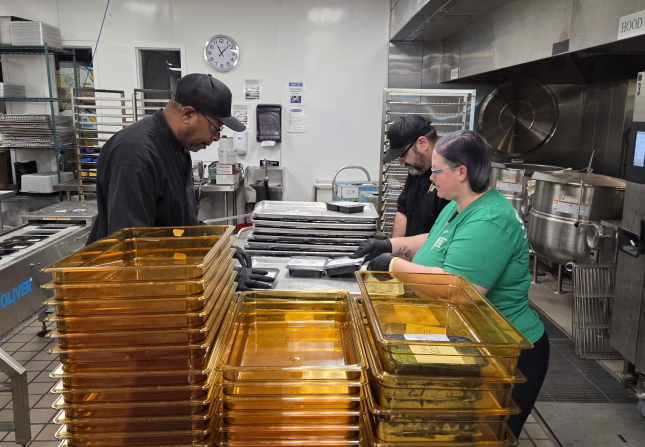
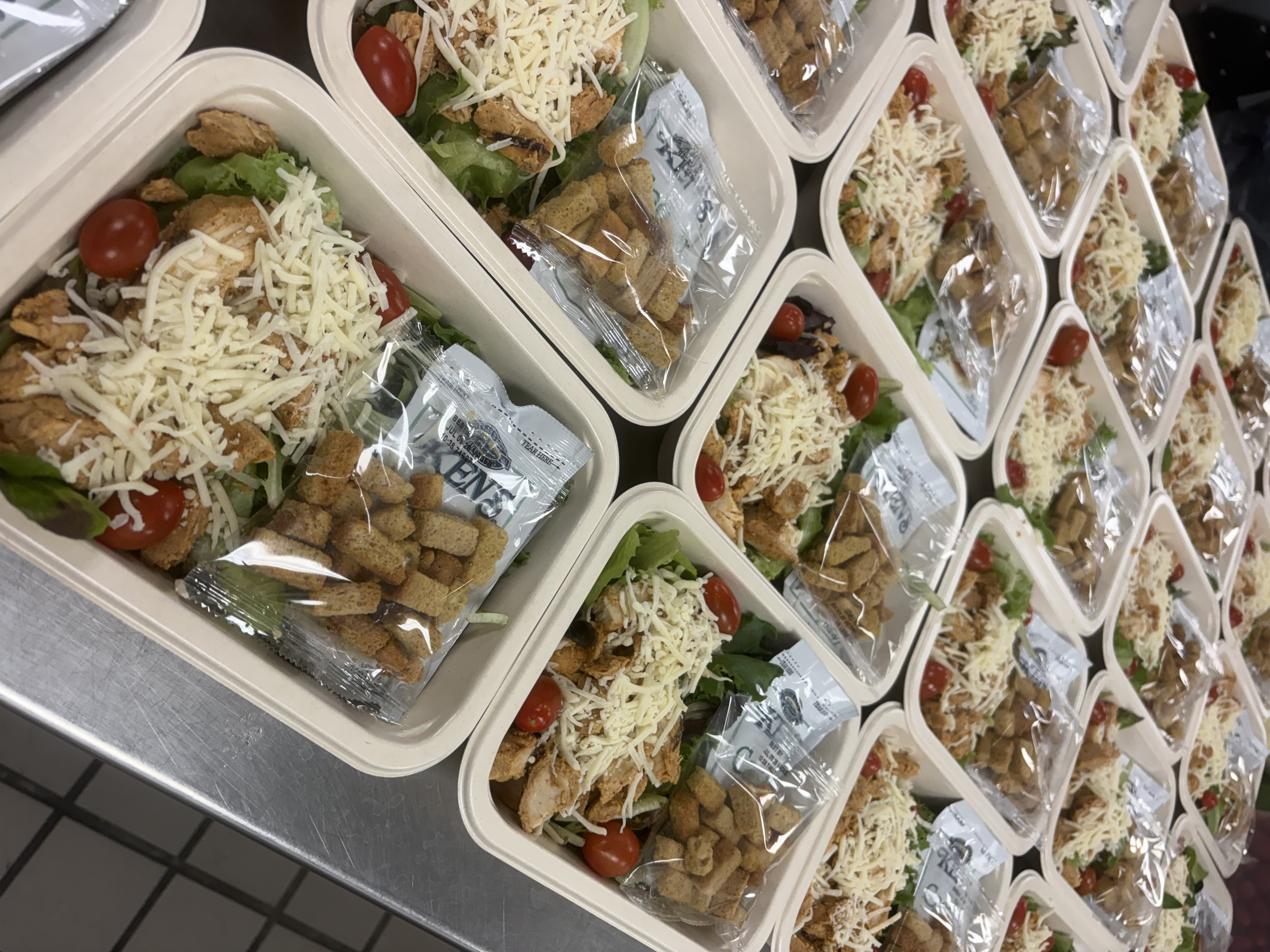
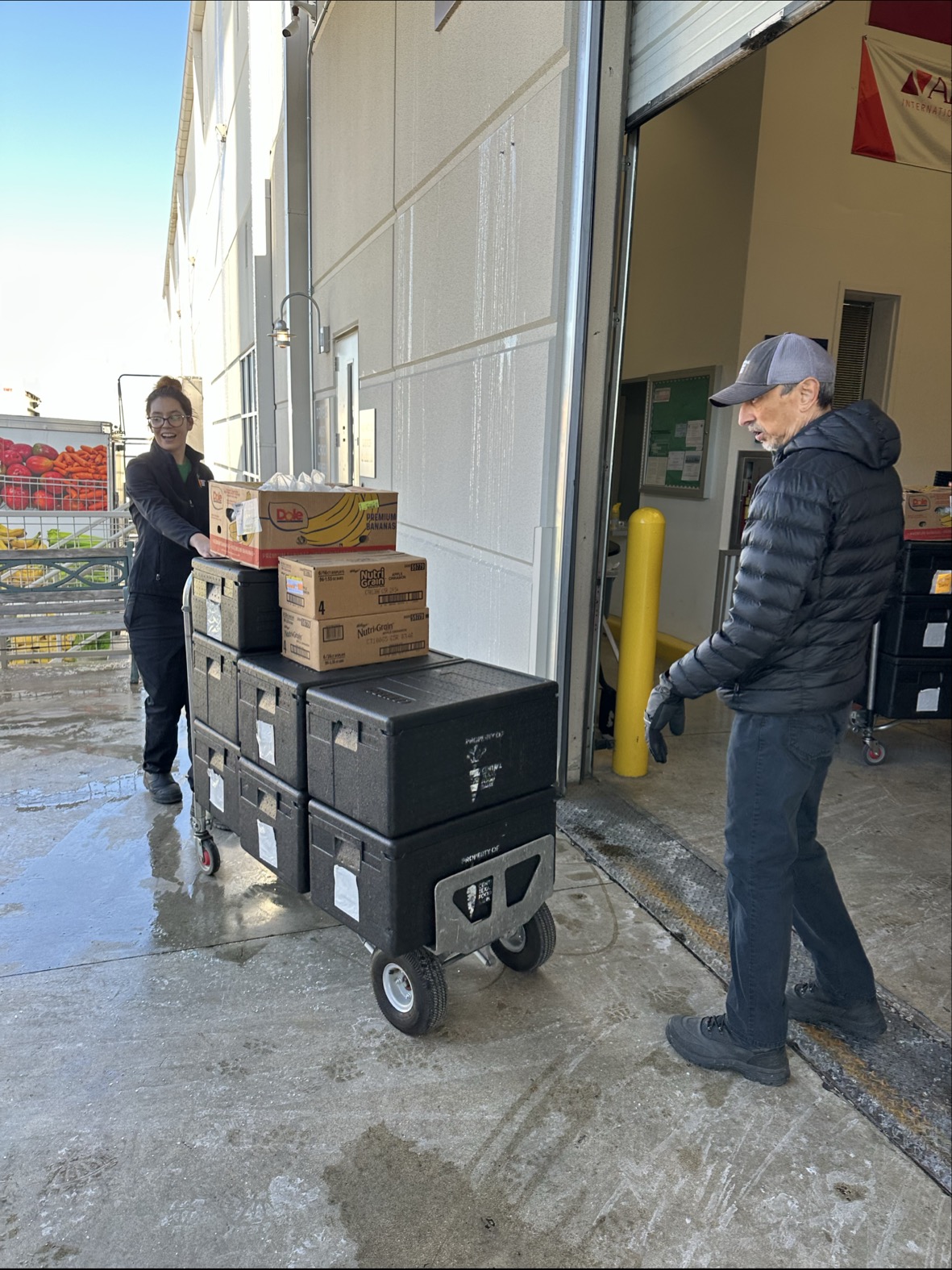
When emergency shelters or warming centers open, we work with the City of Austin, Travis County, and surrounding counties to deliver meals, snacks, and bottled water. Food is prepared in our kitchens or pulled from emergency reserves, then transported by our drivers directly to shelters and community sites. This allows people staying in shelters, as well as those visiting warming centers during the day, to have reliable access to food even when grocery stores, schools, or workplaces are closed.
A Standing Partnership Built for Emergencies
Our partnership with Austin Emergency Management allows us to respond quickly and flexibly during cold weather events and major disasters of any kind. Through this agreement, the city can call on us to provide:
-
Nutritious, ready-to-serve meals for overflow shelters.
-
Emergency mobile pantry distributions when needed.
-
Food support scaled to the size and duration of the emergency.
This partnership ensures a clear, efficient process: the city identifies the need, we respond, and services are reimbursed — allowing us to focus fully on feeding people, not navigating red tape during a crisis.
Supporting Warming Centers Across the County
During the recent ice emergency, we also provided snack items and bottled water to Travis County to ensure warming centers were stocked with resources for neighbors who lost power.
For many residents, warming centers serve as a critical daytime refuge — a place to stay safe, recharge, and access food and water. By supplying these locations, we help ensure that support reaches people wherever they are seeking relief.
Coordination at Every Level
Emergency response is never a solo effort. We work closely with:
-
The City of Austin
-
Travis County Emergency Management
-
Surrounding counties
-
Local emergency responders
Together, we assess existing needs, anticipate gaps, and determine the most appropriate food response — whether that means hot meals, shelf-stable items, snacks, or bottled water.
During large scale events, because we are a part of the Feeding America network, we’re able to rely on 200 other food banks across the country to provide additional support – food or staff that can be deployed to help.
We’re Prepared Before the First Call Comes In
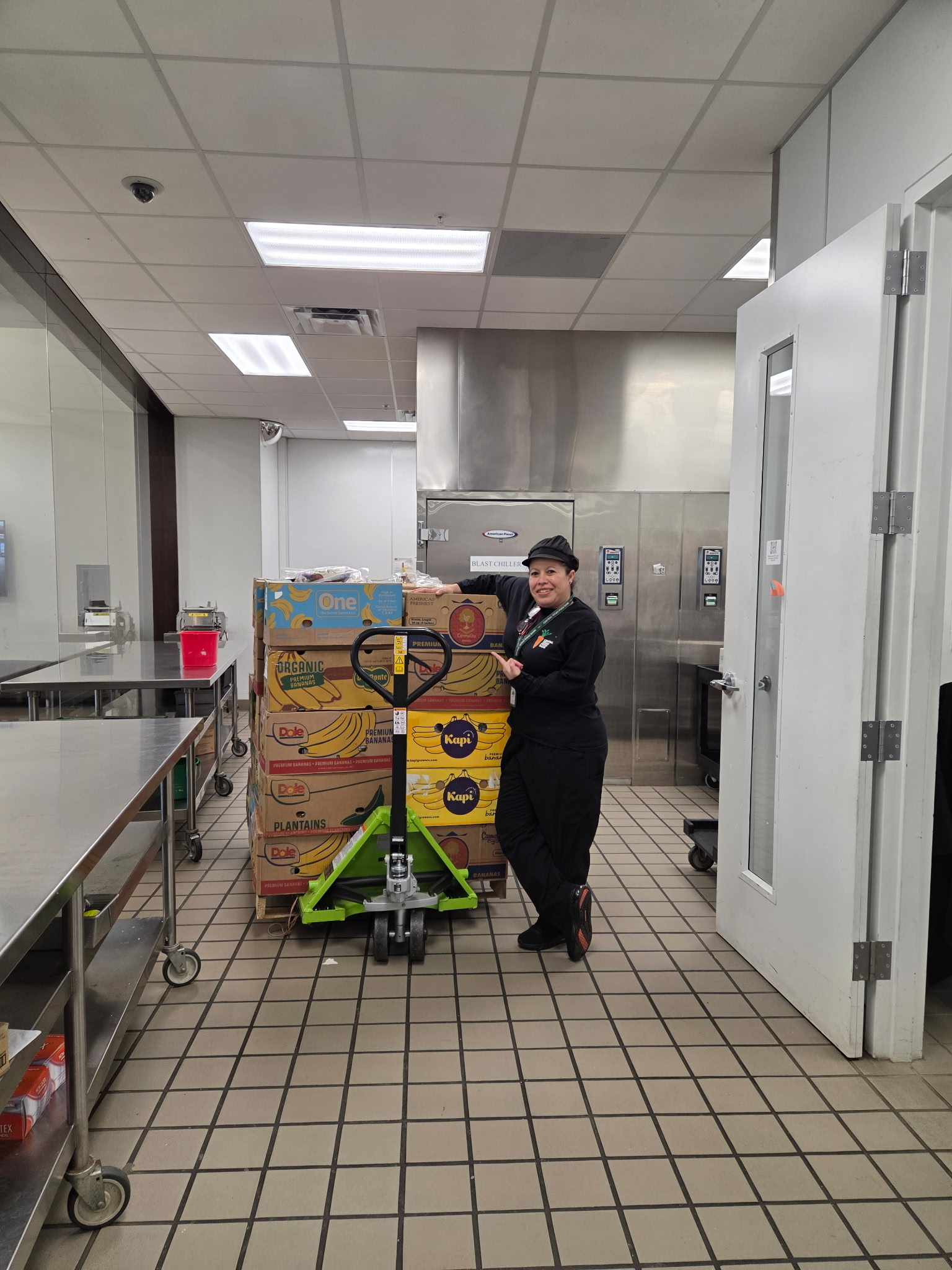
One of the most important parts of emergency response happens before an emergency ever occurs. We maintain thousands of meals that are ready to go at any point. Our team plans days in advance to ensure kitchens, warehouses, and logistics systems are fully stocked and staffed to respond to disasters at any scale.
This level of readiness allows us to move quickly, even as conditions change, and to sustain support for as long as the community needs it.
Emergency Response Is Our Everyday Work
“Emergency response is what we do every day — not just when the forecast turns severe. We’re honored to partner with the City of Austin, Travis County, surrounding counties, and local emergency responders to ensure Central Texans continue to have access to nutritious food during sudden weather events,” said Sari Vatske, President + CEO of the Central Texas Food Bank. “Our first-in, last-out approach is powered by an exceptional team of dedicated food bankers who prepare and distribute meals rain or shine, showing up for our community when it needs us most.”
From our kitchen teams to our drivers, planners, and partners, emergency response reflects who we are and why we exist — making tomorrow possible by ensuring food is there today, even in the most challenging moments.