
Built on Welcome: Inside Hill Country Community Ministries’ Small-Footprint, Big-Heart Model
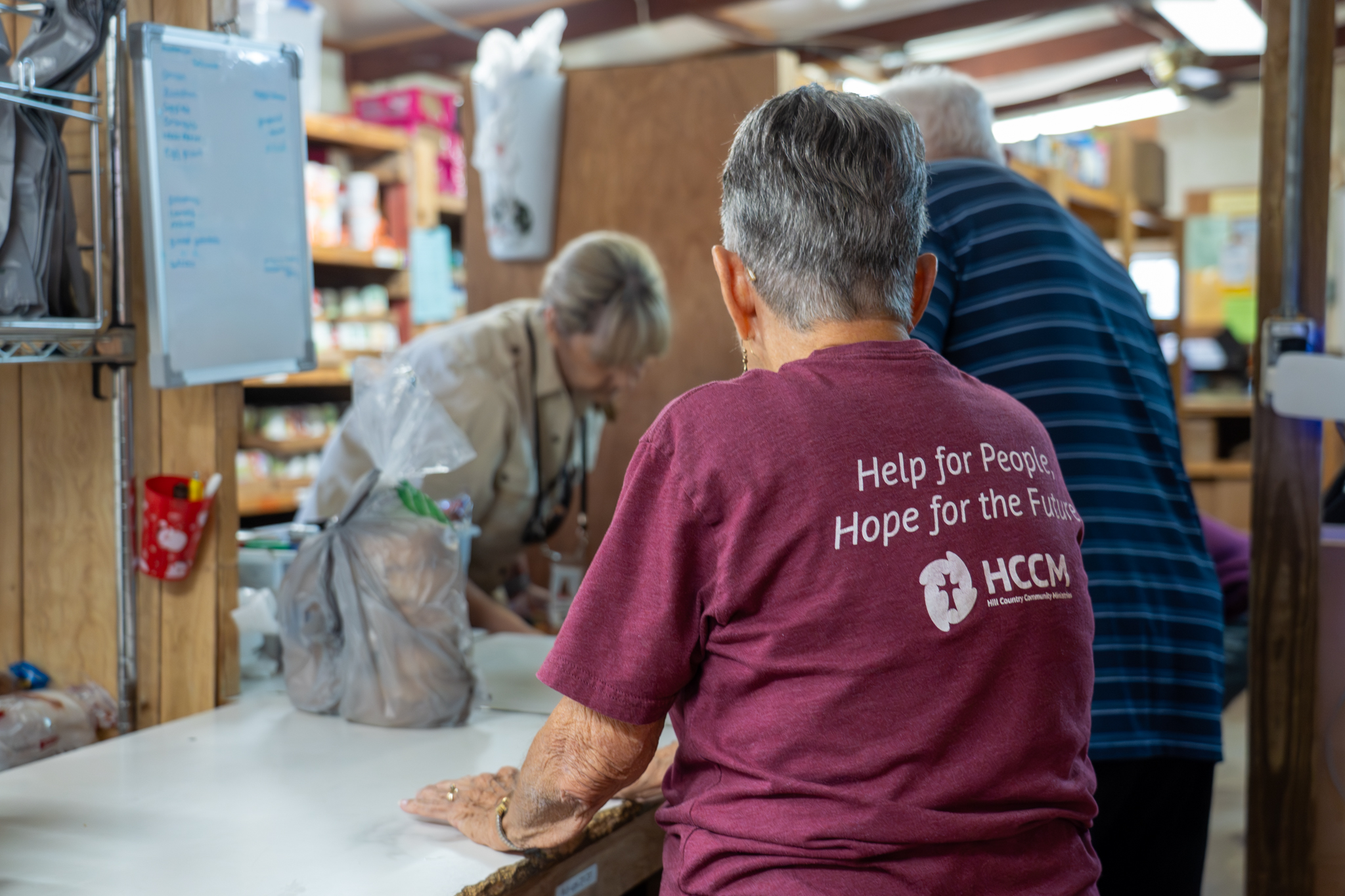
Walk onto the Hill Country Community Ministries (HCCM) campus on any given morning, and you can feel it immediately — energy, purpose, and care in motion. The property hums with activity: volunteers bagging groceries, neighbors visiting the Community Cupboard, staff greeting neighbors by name. Every corner of this small but mighty space feels touched by intention.
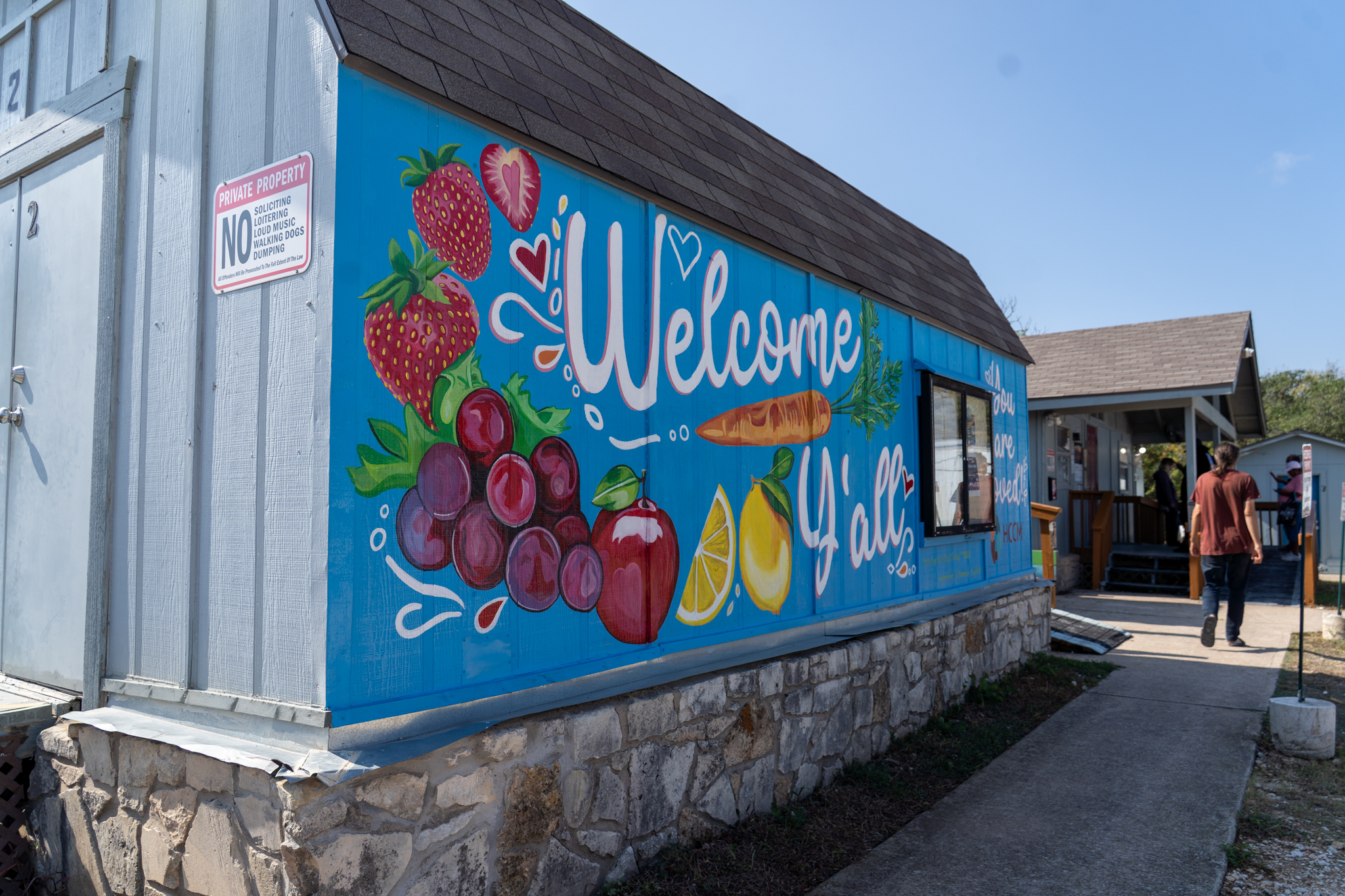
Founded in 1983, HCCM still operates out of its original portable building, added onto over the decades with creativity and care. Inside, signs read Welcome Center and Community Area — words chosen with purpose. Executive Director Tiesa Hollaway explains that the language is part of the mission.

“Nothing will humble you more than having to ask for help,” she says. “We want people to feel warm and seen the moment they arrive.”
That philosophy runs through everything HCCM does. When Hollaway joined the organization ten years ago, she quickly discovered that rigid rules and eligibility requirements were keeping too many people from receiving help. After learning a homeless neighbor had been turned away for not living in the right ZIP code, she made a promise: that will never happen again.
Today, HCCM serves neighbors across more than 10 ZIP codes in Central Texas.
Meeting Neighbors Where They Are
What began as a modest food pantry has evolved into a network of programs designed to meet people wherever they are in their journey toward stability.
In 2016, HCCM launched Fresh Food for All, a mobile market that brings free, farmers market-style distributions to 10 sites across the region — from Jonestown to Jarrell to Florence. Families can choose from seasonal fruits and vegetables, often sharing rides or picking up for elderly neighbors.
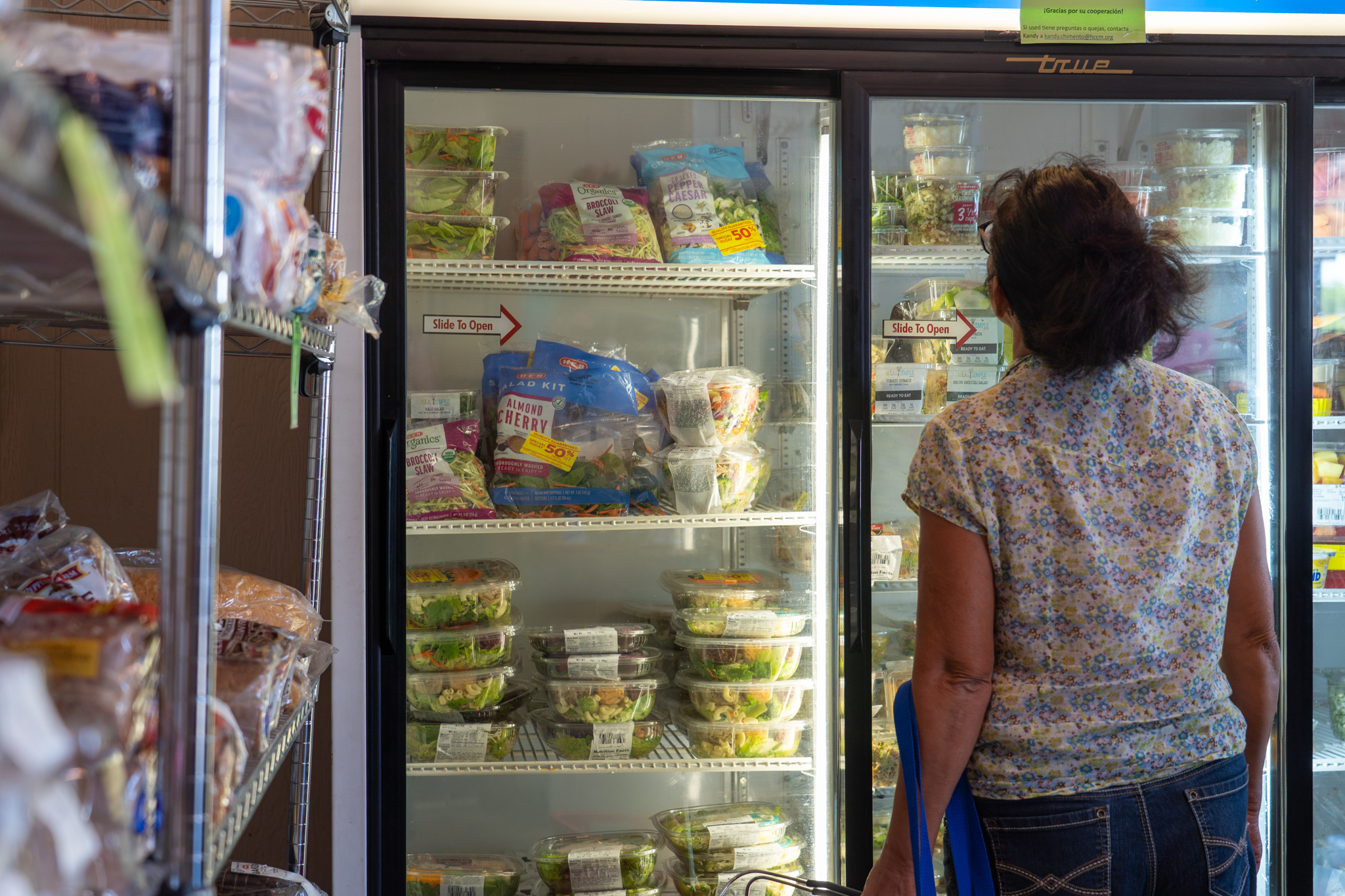
Closer to home, the Community Cupboard offers daily access to sandwiches, salads, and fresh food donated by local retail partners. It’s a resource for those who can’t store large quantities of groceries or who may feel hesitant about becoming a full-service client.
Hollaway says those small touches matter, “Most families we see are in transition. Costs have doubled, but pay hasn’t. One crisis can wipe out savings. That’s why welcome isn’t optional here.”
Scale in Tight Quarters
The organization’s impact far exceeds its footprint. From a 900-square-foot space, HCCM now distributes more than 1.3 million pounds of food each year, serves over 138,000 people, and operates 18 programs supported by 22 collaborative partnerships and more than 200 volunteers.
Every day, about 120 to 150 families visit the Community Cupboard — all within a five-hour window.
“It works because the community shows up,” Hollaway says.
Behind the Scenes: The Systems That Keep It Running
If Hollaway is the voice of the mission, Kandy Chimento, Director of Program Services, is the steady hand ensuring it all runs smoothly. After more than 15 years with HCCM, she oversees volunteers, food programs, and client services — turning care into structure.
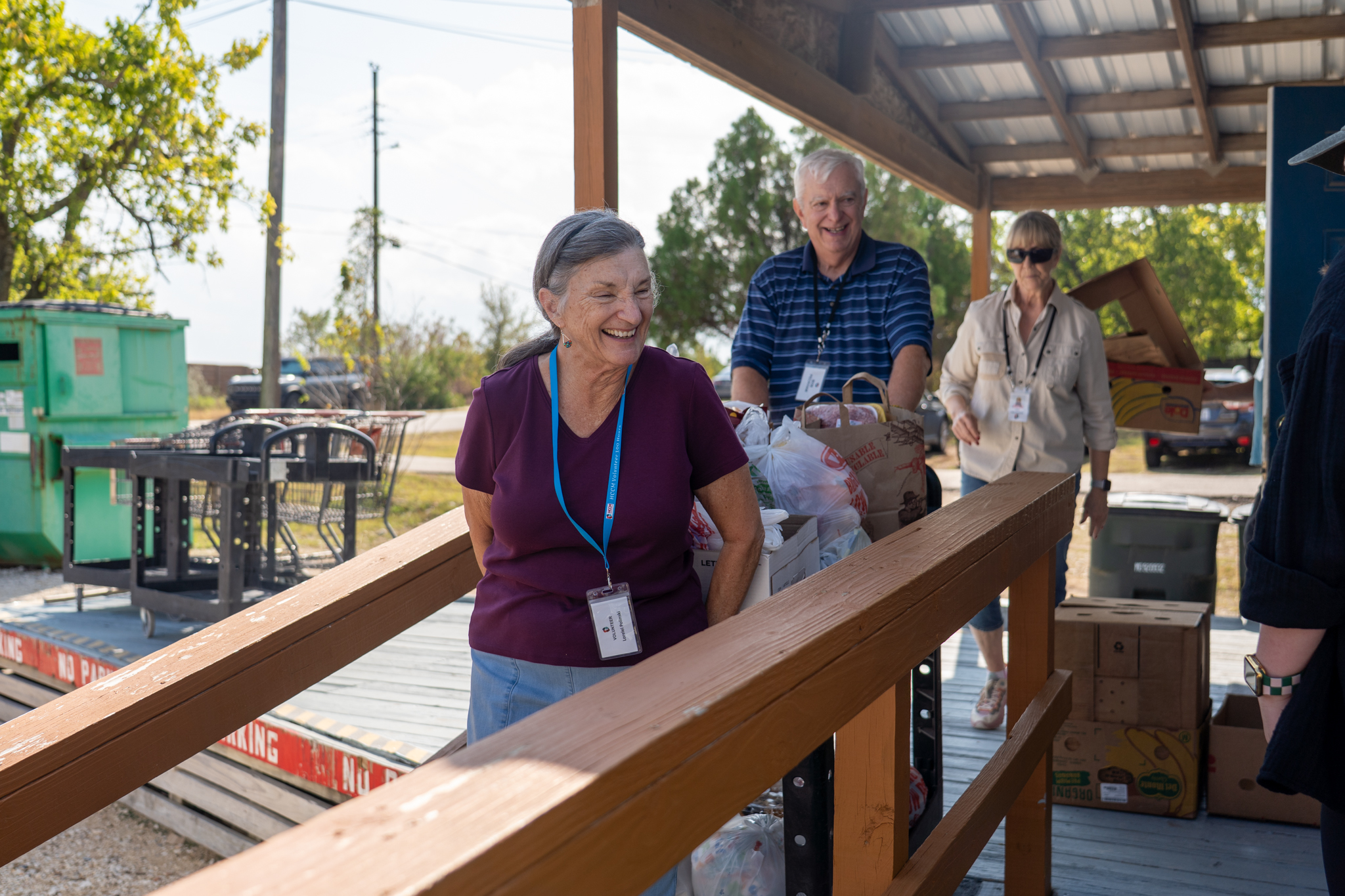
“When I started, we received food bank deliveries twice a month,” Chimento says. “Now it’s twice a week. That partnership has meant we’ve never had to close our doors or turn anyone away because we didn’t have food.”
For Chimento, client choice is key to maintaining dignity and connection. HCCM’s pantry and mobile markets mirror the grocery store experience, where neighbors choose the foods that work best for them.
“If someone doesn’t like eggplant, they don’t have to take it,” she says with a smile. “We hear things like, ‘I can’t believe you have mangoes!’ or ‘I haven’t had beets in forever!’ And it’s beautiful to watch people share recipes and ideas in line. Choice creates community.”
HCCM also schedules pantry visits by appointment — a necessity given their limited parking, but one that’s turned into an unexpected strength. “Appointments let us spend time with people,” Chimento explains. “We can ask if they need diapers, milk, or eggs. Volunteers get to know families by name. People may not love that they need help, but they know they’re welcomed here.”
Even in times of crisis — from floods and freezes to the recent government shutdown — the team adapts.
“We’ve seen more people who’ve lost jobs, who are dealing with higher expenses, or who are caring for other families,” says Chimento. “Whatever the reason, we meet them where they are.”
A Partnership Rooted in Trust
HCCM’s relationship with the Central Texas Food Bank remains a cornerstone of its work. Together, they coordinate deliveries, share resources, and plan strategically to meet rising demand across Central Texas.
“You can’t do this work alone,” Hollaway says. “Partnership is everything. The food bank’s support, communication, and willingness to collaborate have allowed us to keep growing and stay strong.”
That partnership is visible in every shelf and bag of groceries — and in the stability it creates for families who might otherwise face an empty pantry.
Building Toward Tomorrow
After decades of growing within the same modest footprint, HCCM’s leadership is dreaming bigger. Hollaway and her team are exploring ways to expand their reach and reimagine what holistic community care can look like in the future.
Their long-term vision includes creating a shared campus model — a “nonprofit mall” where food, social services, health resources, and volunteer opportunities exist side by side. The goal is simple but profound: make access easier, reduce barriers, and ensure that no one has to tell their story twice to get the help they need.
“We can’t be everything to everyone,” Hollaway says, “but we can bring more of what people need to one place.”
How You Can Help
As the cost of living continues to rise and families across Central Texas face uncertainty, partners like HCCM are essential to keeping food and stability within reach.
If you or someone you know needs food assistance, visit our Get Help Page to find a nearby distribution.
If you’re able to give your time or resources, donate or volunteer — because when we stand together, we make tomorrow possible for every neighbor.